Welcome to WordPress. This is your first post. Edit or delete it, then start writing!
Category: Uncategorized
Indpendent Tackle & Marine Shops Unite!
Hey y’all,
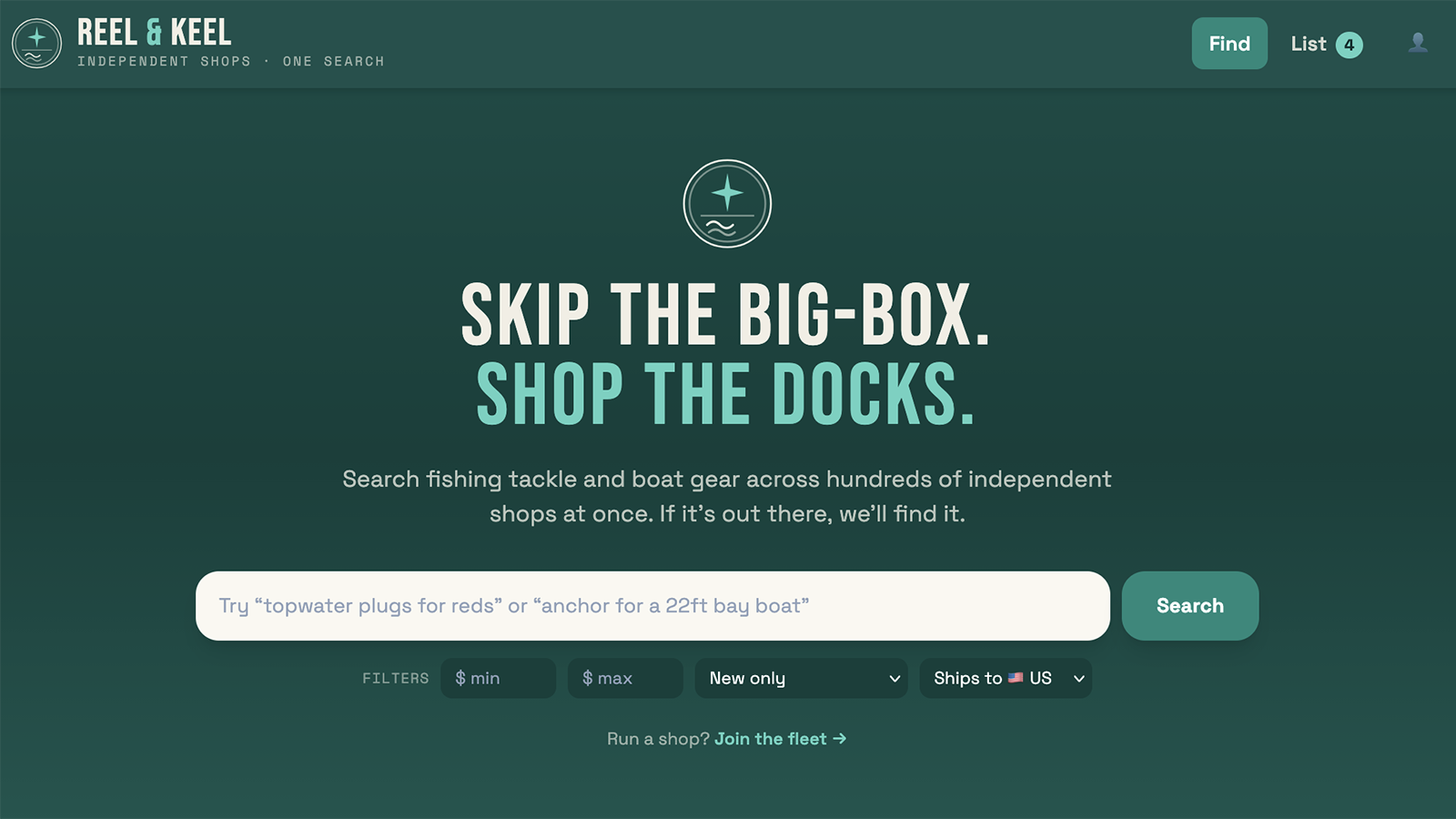
Little detour from the usual shirt talk. We want to tell you about something we built called Reel & Keel.
We’re fishermen first. That’s the whole reason Mudminnow exists. We’re also a small shop trying to make payroll and move product on the internet, same as the tackle store down the road from you. So we see both sides of this thing. We know what it feels like to get buried by the big boxes, and we know what it feels like to want a rod or a box of jigheads and have no easy way to find the folks who actually know the water.
Because that’s the part that bugged us. Search for gear online and the chains own the whole first page. The independent shops, the ones that rig your leader, tell you what the fish are doing that week, and sponsor the kid’s tournament, are buried three pages deep if they show up at all.
So we built a place that puts them first. Reel & Keel searches independent tackle and marine shops all at once, so you can see what’s in stock without ever landing on a big-box page. When you find what you want, the link takes you straight to that shop’s own site and you check out with them. We don’t sell you anything on it, we don’t mark anything up, and it doesn’t cost the shops a dime.
Why go to the trouble? Same reason we started Mudminnow. Rising tide, all boats. When money spent on fishing stays with people who actually fish, all of us do better, us included.
It’s young and rough in spots, so kick the tires. Search for something you actually need, and if a shop you love is missing or something looks off, tell us. We read every note.
Tight lines,
The Mudminnow crew
🐾 The Salty Paws Contest

Your Dog Could Win Big This May
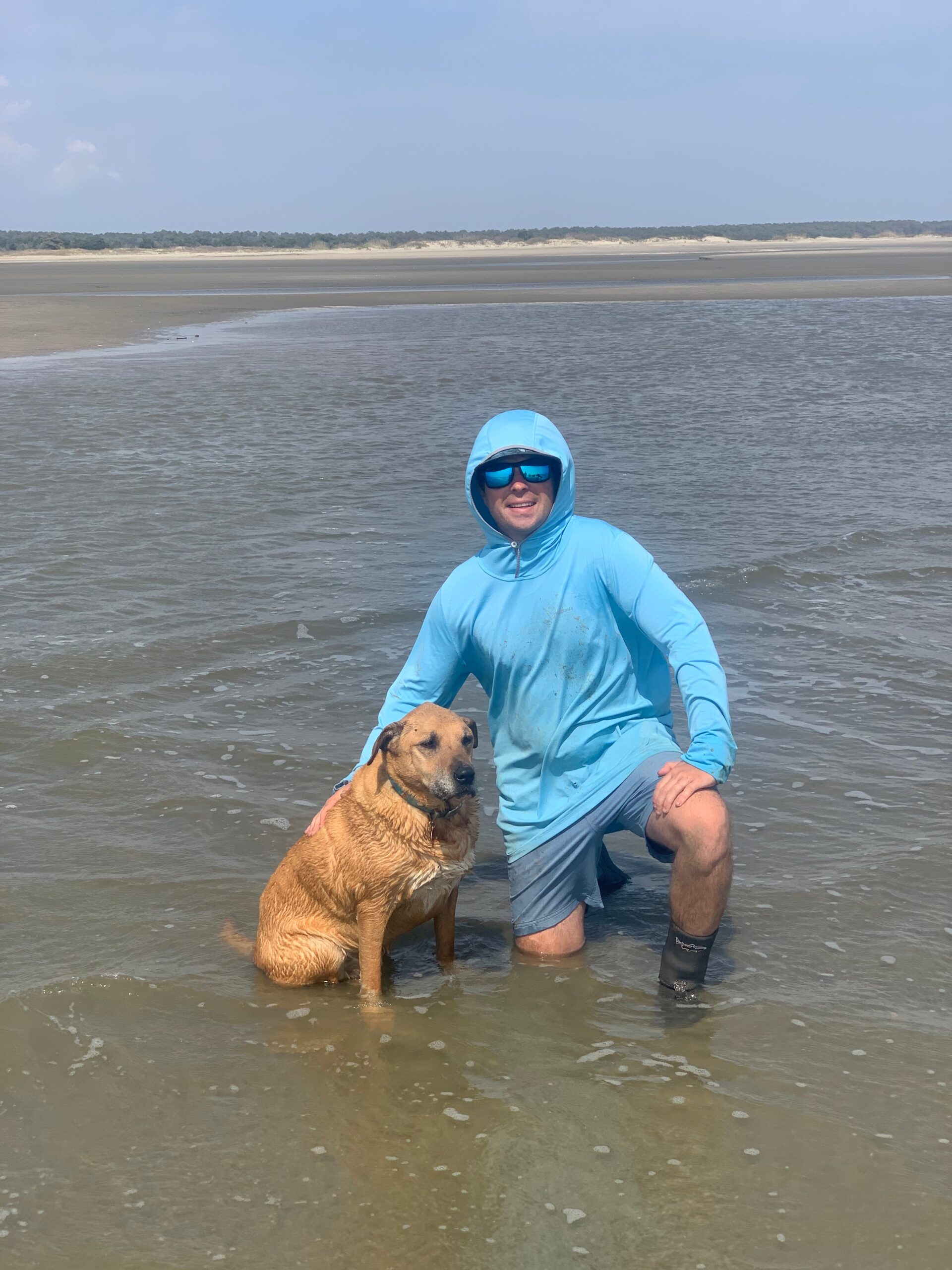
There’s nothing better than a salty dog living their best life—muddy paws, sandy noses, and that look of pure freedom you only find near the water.
This May, Mudminnow Clothing is celebrating our favorite kind of crewmates with the Salty Paws Contest.
Here’s how it works:
- Post a photo of your salty dog on Instagram—beaches, boats, marshes, wherever their wild heart feels at home.
- Tag @MudminnowClothing and use the hashtag #SaltyPawsContest.
- Make sure you’re following us!
The Prize Package:
One lucky dog (and their human) will win:
🏆 A Laser-Etched Yeti Boomer Dog Bowl — built tough for adventures.
📸 A Framed Print of the winning photo — to immortalize your salty legend.
🧣 A Custom Mudminnow Dog Bandana — for stylish tides and trails ahead.
How the Winner is Chosen:
We’ll select three finalists based on spirit, creativity, and full-on salty vibes.
At the end of May, we’ll post the finalists to our Instagram Stories—and you’ll vote for the winner!
Whether your pup is a dockhand, a deck napper, or a professional shoreline sprinter, we want to see them doing what they love most.
Let’s make some tails wag and some hearts swell.
We’ll see you—and your salty pawed best friend—out there. 🌊🐾
Supporting Mental Health Through Every Purchase
Mudminnow Clothing is proud to announce a special initiative this May, supporting Mental Health Awareness Month in partnership with our local Charleston chapter of the National Alliance on Mental Illness (NAMI). In our continued effort to weave the values of sustainability, compassion, and community into the fabric of our brand, we’re dedicating this month to help make a difference in the lives of those affected by mental health challenges.
Why Mental Health Matters to Us
At Mudminnow, our commitment goes beyond creating the highest quality, eco-friendly fishing gear. Inspired by the visionary Decatur Sonenberg, our founder, we strive to promote not only environmental conservation but also mental well-being. The serene marsh ecosystems that we work to protect are more than just crucial habitats—they are sanctuaries that offer peace and solace, reminding us of the profound connection between nature and mental health.
Our Commitment This May
Throughout the month, we will be donating 10% of all proceeds from our sales to NAMI Charleston to support their invaluable work in mental health advocacy and education. By choosing Mudminnow this May, you’re not only investing in sustainable apparel but also supporting a vital cause that affects countless individuals and families.
How You Can Participate
- Shop with Us: Every purchase made in May contributes directly to our donation goal.
- Spread the Word: Share our mission with your friends and family. Together, we can bring more awareness to mental health.
- Stay Informed: Visit our blog and follow us on social media for updates and insights into how your contributions are making an impact.
We believe in the power of community to foster change and create a healthier world. Just as the resilient mudminnow thrives against the odds, we strive to empower and support our community in facing mental health challenges.
Join us this May. Let’s cast a wider net of support and make a lasting impact.
Why Mudminnow Chooses Recycled Nylon for Snapback Hats
Snapback hats have become a staple accessory in streetwear fashion as well as in the fly fishing world. However, as we become more conscious of our environmental impact, it’s important to consider the materials used in the production of these hats. Enter recycled nylon – a sustainable and eco-friendly material that is perfect for snapback hats. In this article, we’ll take a closer look at why Mudminnow chooses recycled nylon for snapback hats.
Eco-Friendly Material
Recycled nylon is made from post-consumer waste, such as fishing nets, that would otherwise end up in landfills or oceans. By repurposing this waste into a new material, we are reducing the amount of waste that ends up in our environment. Additionally, recycled nylon requires less energy and resources to produce compared to virgin nylon, which is made from non-renewable fossil fuels.
Durability
Nylon is known for its strength and durability, and recycled nylon is no exception. In fact, recycled nylon is often more durable than virgin nylon, making it a great material for snapback hats that are designed to withstand daily wear and tear. At Mudminnow, we believe in creating products that are built to last, so our snapback hats made from recycled nylon are sure to stand the test of time as long as you shelf them or hang them up after use.
Comfort
Recycled nylon is also a comfortable material to wear. It is lightweight and breathable, making it perfect for snapback hats that are often worn during the warmer months. Additionally, recycled nylon is quick-drying, which is useful for hats that may get wet from rain or sweat. Mudminnow wants our customers to feel comfortable and confident in their snapback hats, and using recycled nylon helps us achieve that goal.
Variety of Colors and Designs
Recycled nylon can be dyed in a variety of colors and patterns, making it a versatile material for snapback hats. We offer snapback hats made from recycled nylon in a range of colors and designs inspired by our love for inshore fishing. And because the material is durable and fade-resistant, the colors and designs will stay vibrant over time.
Sustainable Fashion
Using recycled nylon for snapback hats is not only great for the environment and your wardrobe, but it also supports sustainable fashion. By choosing eco-friendly materials, we can reduce our environmental impact and promote sustainable practices in the fashion industry. Overall, we’re proud to be a part of the sustainable fashion movement and hope to inspire others to make conscious choices when it comes to their fashion purchases.
Conclusion
At Mudminnow, we’re committed to sustainability and using recycled nylon for our snapback hats is just one way we’re making a positive impact. Recycled nylon is an eco-friendly, durable, comfortable, and versatile material that is perfect for snapback hats. By choosing snapback hats made from recycled nylon, we can support sustainable fashion and reduce our environmental impact. So next time you’re in the market for a new snapback hat, consider choosing one made from recycled nylon and join us in the journey towards a more sustainable future.
Textile Innovation: Driving Sustainability in the Fishing Industry
Textile innovation is essential for driving sustainability in the fishing industry. In this article, we’ll explore why textile innovation is crucial for sustainability, the benefits of investing in innovation, and how both consumers and producers can choose and create eco-friendly products.
Innovation is essential for sustainability because it enables us to find new and better ways to protect our planet’s resources. Textile innovation can help mitigate negative impacts such as pollution by creating more eco-friendly and sustainable fishing gear.
Investing in innovation may require an initial upfront cost, but in the long run, it can actually save money. Eco-friendly materials may be more expensive initially, but they tend to last longer and require less maintenance, which ultimately saves money. In addition, innovations that reduce environmental damage can help prevent costly fines and lawsuits.
The fishing industry is global, and textile innovation can help create a more sustainable and equitable global economy. By sharing innovative ideas and collaborating across borders, we can create a more sustainable and interconnected global fishing industry.
Innovation actually creates jobs by driving economic growth and creating new industries. Textile innovation can create new jobs in research and development, manufacturing, and marketing.
Both consumers and producers can play a role in driving textile innovation and promoting sustainability in the fishing industry. As a consumer, you can choose eco-friendly products that are made from sustainable materials, have minimal environmental impact, and are produced ethically. As a producer, you can create eco-friendly products by using sustainable materials, adopting innovative technologies, and following environmentally friendly practices.
In conclusion, textile innovation is essential for driving sustainability in the fishing industry. By investing in innovation, we can create more eco-friendly and sustainable fishing gear, protect our oceans, and create new jobs and industries. As a consumer or producer, you can play a role in promoting sustainability by choosing and creating eco-friendly products. Together, we can create a more sustainable and equitable global fishing industry.
Overfishing And Why It Hurts
Overfishing is a growing concern for our oceans and the ecosystems that rely on them. While fishing can be a great way to enjoy the outdoors, provide food for your family, and connect with nature, it’s important to understand the negative impacts of overfishing and take steps to reduce them. In this article, we’ll explore the negative effects of overfishing in saltwater, with a focus on the southeastern coastal waters, and provide tips for practicing sustainable fishing.
First, let’s define overfishing. Overfishing occurs when fish are caught at a rate faster than they can reproduce, leading to a decline in population sizes and potential extinction. This can have a ripple effect throughout the entire ecosystem, as fish are an important food source for many other species. Overfishing can also result in the loss of biodiversity, changes in the food chain, and the destruction of habitats.
In southeastern coastal waters, overfishing has had a significant impact on many species nearshore and inshore, like red snapper, black sea bass, and grouper for example. These species are highly valued by recreational and commercial fishermen, which has led to their overfishing. Additionally, bycatch (the unintended capture of non-target species) can also be a problem in these waters, leading to the depletion of other species and the destruction of habitats. Redfish, Trout, and Flounder also are senstive to overfishing.
To combat overfishing and its negative effects, there are several steps that anglers can take. One approach is to consider not limiting out every time you go fishing. While it can be tempting to take home as many fish as possible, this can contribute to overfishing and harm the ecosystem. Instead, consider only keeping what you need for a meal or two, and release the rest back into the water. If you’re throwing out freezer fish you’re probably overfishing.
Another important step is to release fish over 20 inches in length, this is particualy important to inshore species mentioned earlier (redfish, trout, and flounder). The larger fish are typically older and more valuable for the population, as they have had more time to reproduce and contribute to the ecosystem. Additionally, by releasing larger fish, you are allowing them to potentially spawn more and increase the population size.
It’s also important to release bycatch. While some species may be considered “trash” fish, every species has a role to play in the ecosystem. Releasing bycatch can help to maintain a healthy balance of species in the ecosystem and prevent the depletion of non-target species.
Finally, consider using sustainable fishing practices such as circle hooks, which are designed to reduce the incidence of deep hooking and allow for easier release of fish. Additionally, using artificial lures instead of live bait can help to reduce the unintended capture of non-target species.
In conclusion, overfishing is a significant problem in southeastern coastal waters and can have negative effects on the ecosystem. By taking steps to practice sustainable fishing, such as not limiting out every time, releasing larger fish, releasing bycatch, and using sustainable fishing practices, anglers can help to reduce the negative impacts of overfishing and contribute to a healthier ecosystem. Let’s all do our part to preserve our oceans and the species that call them home.
Plastic Pollution in the Ocean: The Threat to Marine Life
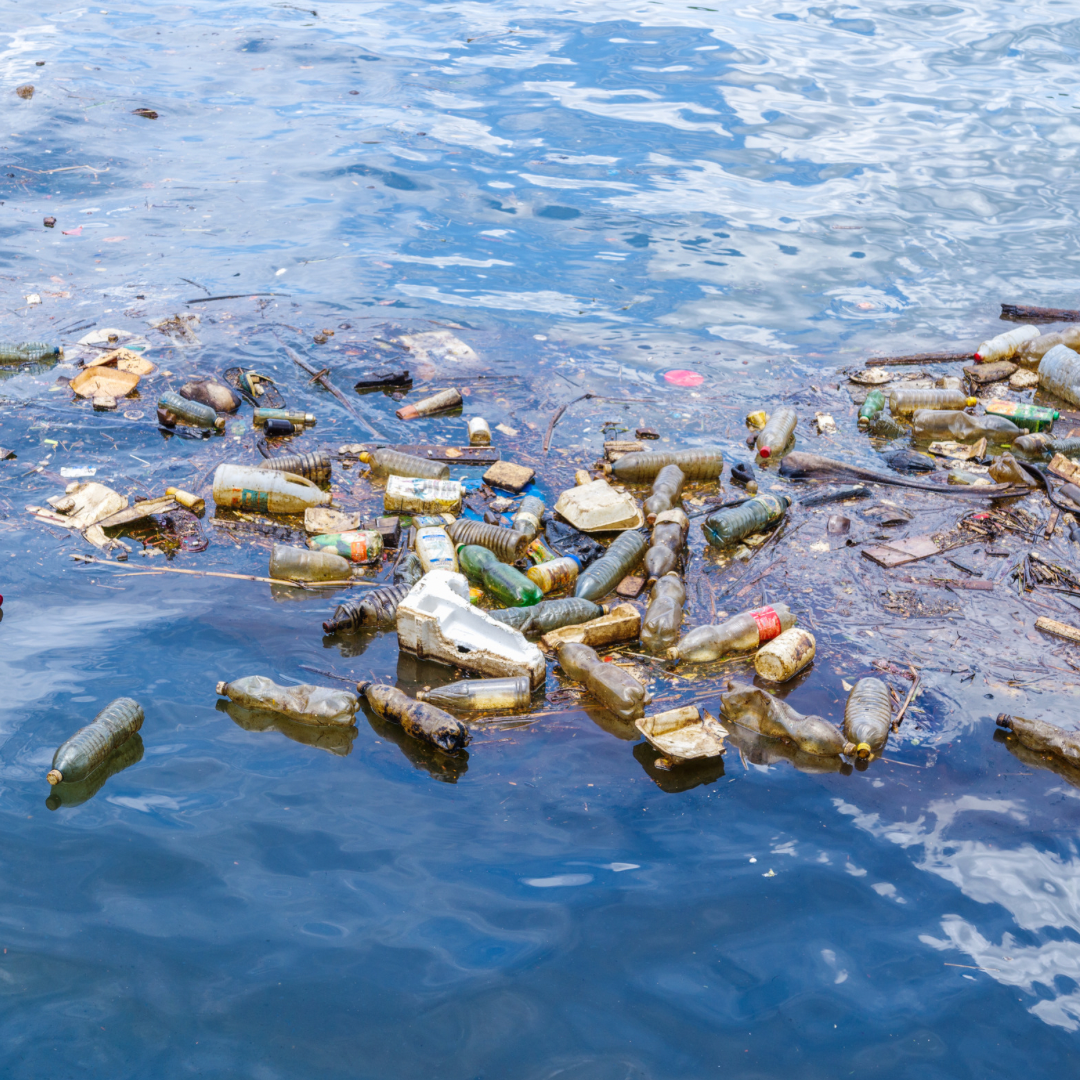
Plastic pollution in the ocean is a growing threat to marine life. Every year, millions of tons of plastic waste end up in the ocean, harming wildlife and damaging fragile ecosystems.
Plastic pollution in the ocean comes from a variety of sources, including discarded fishing nets, plastic bags, and microplastics. But one often-overlooked source is clothing. The fashion industry is a major contributor to plastic pollution, with synthetic materials like polyester shedding microfibers that are too small to be filtered out by wastewater treatment plants. These microfibers enter waterways and eventually make their way to the ocean, where they can be ingested by marine life or accumulate in the food chain.
But it’s not just synthetic materials that are contributing to the problem. Natural materials like cotton also have an impact. Cotton is a water-intensive crop that requires large amounts of pesticides and fertilizers. These chemicals can end up in waterways and harm aquatic life. And when cotton clothing is discarded, it can take years to biodegrade, contributing to the growing problem of plastic pollution in the ocean.
So what can be done to address the problem of plastic pollution in the ocean? One solution is to reduce our reliance on plastic altogether. This means using less single-use plastic, recycling what we do use, and seeking out alternatives to plastic in our everyday lives. It also means being mindful of the clothing we buy, choosing natural materials like organic cotton or hemp, which have a lower environmental impact.
At Mudminnow, we are committed to doing our part to reduce plastic pollution in the ocean. We use sustainable materials like organic cotton and recycled nylon in our clothing, and we have also been developing hemp and recycled polyester prototypes for almost two years. We are constantly looking for ways to reduce our impact on the environment. We believe that by working together, we can make a difference and protect our oceans for generations to come.
Do Fish Feel Pain? Separating Fact from Fiction.
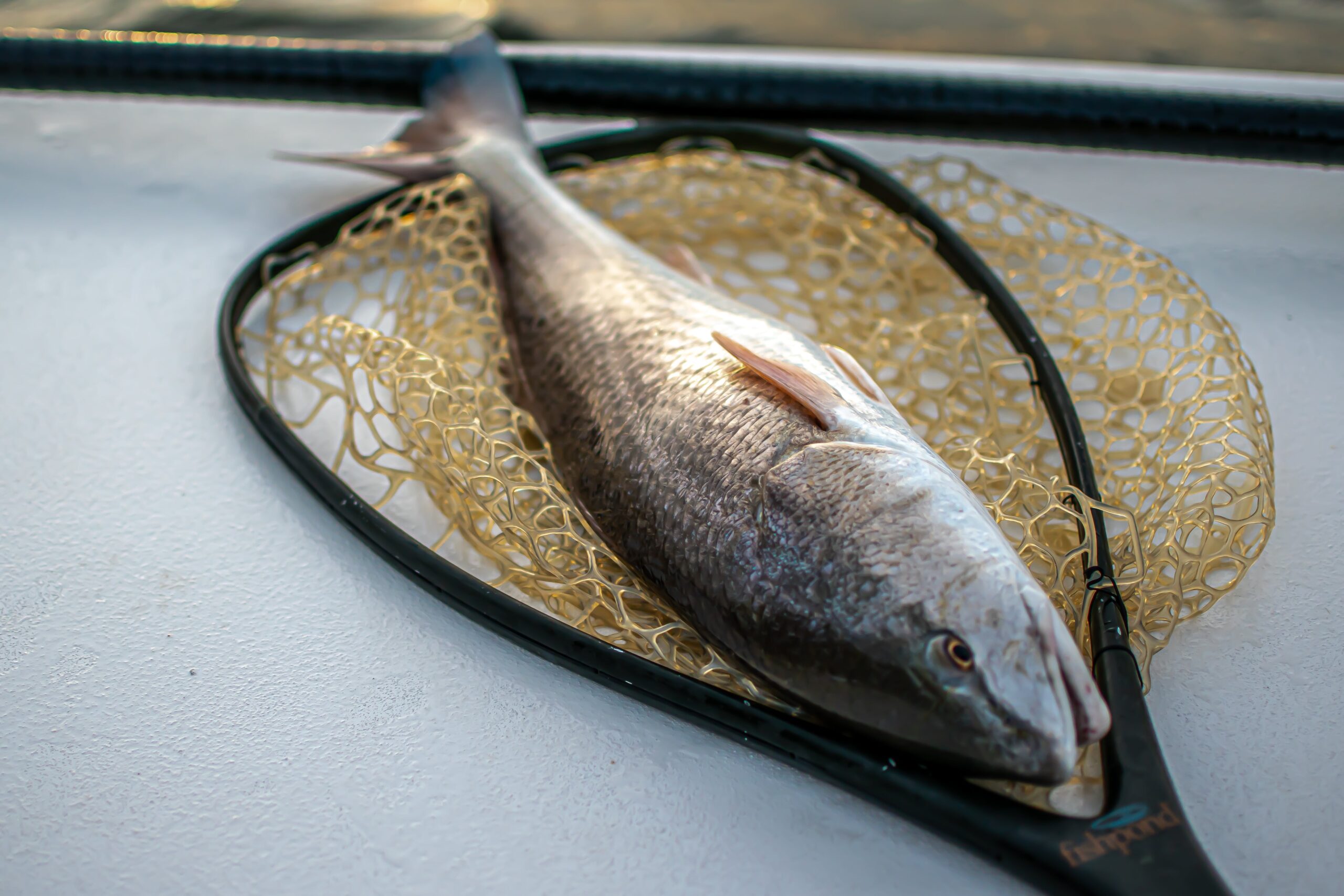
When it comes to fishing, there’s a common belief that fish don’t feel pain. However, recent studies have shown that fish do, in fact, have the ability to experience pain. As a sustainable fishing clothing brand, Mudminnow is dedicated to promoting ethical and responsible fishing practices, and this includes a discussion on the issue of whether or not fish feel pain.
There are several factors that contribute to the belief that fish do not feel pain. One is that fish have a different nervous system compared to mammals, including humans. They lack the neocortex, the part of the brain that’s responsible for processing emotions, including pain. Additionally, fish may not display the same behavioral responses to pain that mammals do, which can make it difficult to recognize when a fish is experiencing discomfort.
However, recent research has shown that fish have complex nervous systems that allow them to sense and respond to a range of stimuli, including pain. Studies have shown that fish can experience both acute and chronic pain, and can display behavioral and physiological responses to painful stimuli.
So, what does this mean for ethical and sustainable fishing practices? First and foremost, it’s important to recognize that fish are living creatures and should be treated with respect and compassion. Mudminnow advocates for the use of sustainable fishing techniques that minimize harm to fish and their habitats. This includes using barbless hooks, which cause less tissue damage and allow for easier hook removal, as well as catch-and-release practices that minimize stress and injury to fish.
Mudminnow also supports the use of humane methods for dispatching fish that are intended for consumption. This can include using methods such as percussive stunning or electrical stunning, which are designed to quickly and effectively render fish unconscious and minimize suffering.
In conclusion, while the belief that fish do not feel pain has been widespread, recent research has shown that fish are capable of experiencing pain. As a responsible fishing brand, Mudminnow encourages ethical and sustainable fishing practices that take into account the wellfare of fish and their environments. By treating fish with compassion and respect, we can ensure that fishing remains a sustainable and responsible activity for generations to come.
Origins of the Lowcountry Boil
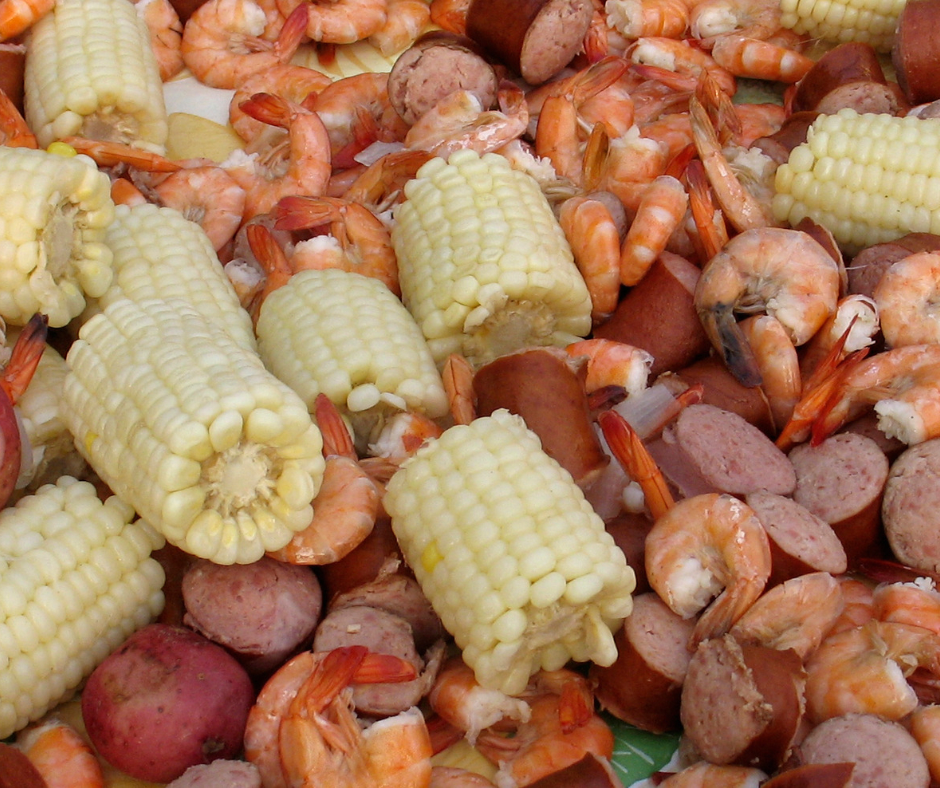
Frogmore stew, also known as Lowcountry boil, is a delicious and hearty dish that originated in the coastal regions of South Carolina and Georgia. This dish is a staple in Southern cuisine and has become a popular menu item at seafood restaurants throughout the United States. Frogmore stew is often associated with the Geechie and Gullah cultures, and its history reflects the rich culinary traditions of these communities.
The origins of frogmore stew can be traced back to the early 20th century in the small town of Frogmore, South Carolina. Frogmore was a small community located on St. Helena Island in Beaufort County, which was home to a large population of Geechie and Gullah people. These communities were descendants of enslaved West Africans who were brought to the Lowcountry region of the United States to work on rice plantations.
The Geechie and Gullah people developed a unique culture that blended West African traditions with elements of Southern culture. This culture included a distinct cuisine that relied heavily on seafood, rice, and other local ingredients. Frogmore stew is an excellent example of this cuisine.
Frogmore stew is a one-pot dish that typically includes fresh shrimp, sausage, corn on the cob, and potatoes. The ingredients are boiled together in a large pot with spices such as Old Bay seasoning, and the resulting dish is served with hot sauce, butter, and lemon wedges. The dish is often eaten outdoors, with family and friends gathered around a picnic table.
The name “Frogmore stew” is somewhat misleading, as there are no frogs in the dish. The name actually comes from the community of Frogmore where the dish originated. The term “stew” is also somewhat inaccurate, as the dish is more of a seafood boil than a stew.
Frogmore stew has become a beloved dish throughout the South, and it has spread to other parts of the United States as well. Many restaurants now offer their own versions of the dish, and it has become a popular menu item at seafood festivals and other events.
However, the history of frogmore stew is deeply tied to the Geechie and Gullah cultures, and it is important to recognize and honor these origins. The dish is a testament to the resilience and creativity of these communities, who were able to create a unique and delicious cuisine out of the limited ingredients they had available.
In recent years, there has been a renewed interest in the Geechie and Gullah cultures and their contributions to American cuisine. This interest has led to a greater appreciation for dishes like frogmore stew and a deeper understanding of the history and traditions behind them.
In conclusion, frogmore stew is a delicious and hearty dish with a rich history and cultural significance. Its origins in the Geechie and Gullah communities of the Lowcountry region of South Carolina and Georgia reflect the creativity and resourcefulness of these communities in the face of adversity. Today, frogmore stew remains a beloved dish that is enjoyed by people from all walks of life, and its legacy serves as a reminder of the important contributions of these communities to American culture.